Yes! I remember my first experience with a PC in the 80s was with a Robotron 8086 PC. It did emanate a smell and I could hear interesting mechanical sounds from inside. The motherboard was huge and it had a small 14 inch monochrome green monitor on top of it.
You can also add the --back option as an alias, so you don't need to type it in every time on systems where that is important. You could also use an environment variable to modify the behavior.
The GNU team did this when they added or changed behavior to the original tools. A lot of them have flags like -posix and such which give them a strict set of behaviors.
Alan Kay is the one who said "The best way to predict the future is to invent it." He did so by inventing quite a bit of the technology that is in every PC and smartphone today.
I think he wanted more discoverable everything, the undo was just used as a particularly bad example on the iPhone.
He wants the world to be more discoverable, to modify our very culture so that learning is easy (an example he gave was with math, so it's not just a small, 'smart' percentage of the population who actually gets it, but everyone absorbs it from a young age).
actually I'd argue he understands the problem pretty well. He talks about needing to offer something SO compelling they cannot help but interface with it, in spite of their desire for things that do not push them.
I'm not sure if there's a problem at all. Learning how to do anything is much easier today than ever. Just type "how to do X" in google, and you will probably see a nice YouTube video, or a tutorial. If you get stuck, there are online forums with people willing to help for free, 24/7.
Has the number of people who want to learn decreased? If so, was it because of iPhones/iPads?
When I do that I constantly think why is it so difficult to learn things? Why do I need to look at least 3 different sources just to confirm that they are not bullshitting me?
After learning one thing related to the topic I want to learn I still have 99 to learn but I don't even know what those 99 things are. So basically I'm learning through dumb luck. Yes the reason is that I haven't reached the magical "bootstrap knowledge" where you have enough information in your head to just look up the things I don't know.
Those youtube videos are nice and all but they will barely teach you anything, they are easy to consume low quality crap for lazy people. I know that because I'm one of them.
The fundamental problem is still the same. Discoverability sucks. I still have to ask someone who is more knowledgeable than me. So why not let the AI do that task?
I don't know why it's hard for you to learn things, you were supposed to get the "bootstrap knowledge" in your undergrad education.
My point is that the discoverability today is much better than it was, say, 30 years ago. Back then your options were: go to a library, find and read good books, or find someone knowledgeable, and go talk to him in person, or write him a paper letter with your questions, and hope he responds.
For example, I remember how I was given my first access to a computer, with a command prompt blinking on a black screen, and I had not a slightest idea about what to do with it. Oh, and people nearby were not particularly keen on stopping what they were doing and explaining things to me. I was given a poorly translated DOS manual and a few simple BASIC programs to study. My computer access was limited to one hour, twice a week, and I remember how I thought this was so cool, and that I want to learn.
Sure, nothing wrong with trying to make things more discoverable. I think the first step towards this goal could be making an app which implements what AK is talking about. I'm not sure what this app would be like, or for, but if someone makes it, then we can test how effective are his ideas. You don't have to redesign an iPad to do this.
On the other hand, things can (and probably will) get better organically. The iPad/iPhone is only 10 years old. In that time it has improved both in terms of hardware (e.g. stylus for iPad, 3d touch, extra sensors, slo-mo video recording), and software (voice recognition, Siri, AppStore, multi-tasking, StreetView, even something as simple as cut and paste - none of that was available in iOS 1!). In a few years we will move to smart glasses and virtual/augmented reality. My guess is it will make learning experience better for everyone.
People have little desire to get education force-fed into them. But they have plenty of desire to solve their own problems, whatever those problems are.
What I feel AK (and others) are advocating is for computing to support individual problem-solving in an iterative manner. You have this powerful general-purpose machine, you should be able to mold it towards something that solves the problem you currently have.
Right now the problem is that the horse doesn't even know that water even exists so unless it happens to find it through dumb luck or talks to someone other horse about it's problem it won't ever find water to even consider drinking it.
The idea is that the AI takes over the role of the other horse.
His ideal vision is always described in very abstract terms. If he took the care to write it down precisely, what it should look like, I'm sure there would be hundreds eager to build it for him.
Look at Squeak. http://squeak.org/ The idea that you should be able to dig in and modify things is very powerful.
Another way to look at it is in terms of discoverability: you are at one level of understanding (using the phone, clicking on things), and it should lead you to a deeper level of understanding (perhaps moving things around, modifying them). At each level, there are hooks inviting you deeper, drawing you in. Ideally you get down low enough to start programming, to actually understanding how assembly and the CPU works, so there is no longer any area of magic.
Back in the 90s people used to have their pager connected to CERT to make sure they knew if anything happened. Of course no one uses pagers anymore, but there are places you should definitely pay attention to if you're looking at the software.
It's worth investigating what Utah did, they have some nice internet. http://archive.sltrib.com/article.php?id=3062258&itype=CMSID (their internet has improved since that article, too). Those lucky people have multiple high speed providers.
It seems to be something that's easier to do at a local level.
Let's be honest: the corporations that hire us will drop us as soon as it becomes convenient to the bottom line, and as likely as not without a severance package.
You owe it to yourself to get the best possible compensation package, because no one else will do it for you.
That happens to all workers, but because technical workers are in short supply, that's why they tend to be spoiled and overpriced. Everyone else learns humility.
In retrospect (as the housing prices have mostly recovered: http://www.doctorhousingbubble.com/wp-content/uploads/2013/0... ), the hosing crisis can be seen as an irrational bubble, with the major problem being that the banks were under-capitalized for the risk they were taking on. After several years of injecting capital into the banks for several years, they are fine. Arguably the banks didn't worry about the risk because they trusted the government would help them out.
You're aware that those taxpayers actually got a very good deal, right? Roughly 10% return on investment, we effectively just invested public funds in good companies at cheap prices.
No, you bought after the crash. The relevant question is would you have sold an insurance policy before the crisis and been able to stay solvent through it.
I'm not saying that I bought before the crash, neither did the government. I literally did exactly what the government did; bought shares of banks and automotive companies after the crash, at severely reduced prices, and held for a substantial gain.
The government absolutely did not sell an insurance policy before the crash. Even if you're arguing that there was a guarantee that the banks would be bailed out, which argument has merit, the banks didn't pay for that guarantee.
We did it for different reasons (I won't pretend I was either magnanimous or delusional enough to think my investment by itself would buoy the stock price enough to keep the companies alive) but the actual actions are the same.
Edit: technically both the government and I bought during the crash rather than after; my ROI wishes I'd been better at calling the bottom, but that's life.
Buying stock was only a small part of what the government did for the finance industry. Guaranteeing money market funds, opening up the discount window, bailing out AIG and paying off counterparties at 100%, sinking $100B+ into Fannie and Freddie, etc.
The government had essentially given the finance industry an insurance policy before the crash that paid off during the crash. And you are right, they didn't have to pay for it in money, perhaps its possible to argue that they paid for it in regulation. If the firms had had to buy such a policy on the open market what would the price have been?
What result would have met your test for worked out? Gambling with taxpayers money is a pretty good description of the job of government (will this transportation system get used (consider Detroit's highway system)? Are we encouraging business the right way? Will this law reduce crime?)
Uncertainity about the usage of a hypothetical transportation system is qualitatively different than investing money to a company that has been mis-managed so badly it's going bankrupt.
That article is a little deceptive. It is mainly tracking TARP, it doesn't track the money injected into banks by other methods (like the FED directly buying subprime loans and manipulating the market).
I totally disagree. The Fed isn't taxpayer's money (except maybe inasmuch as its actions effect the money supply).
When people talk about "tax payer dollars" they are talking about funds the federal government has gotten directly from the people through taxes. That is exactly what TARP was.
so, military spending then, that's what i get. i ponied up actual cash which was lent to banks to cover them, but the return on those loans don't come back to me as actual cash. it goes to the federal budget, which is mostly military spending.
it would've been better if the financial sector hadn't fucked up. it would be better if the financial sector wasn't protected--with my money--when it tries to make itself a smoking ruin. it should be protecting itself.
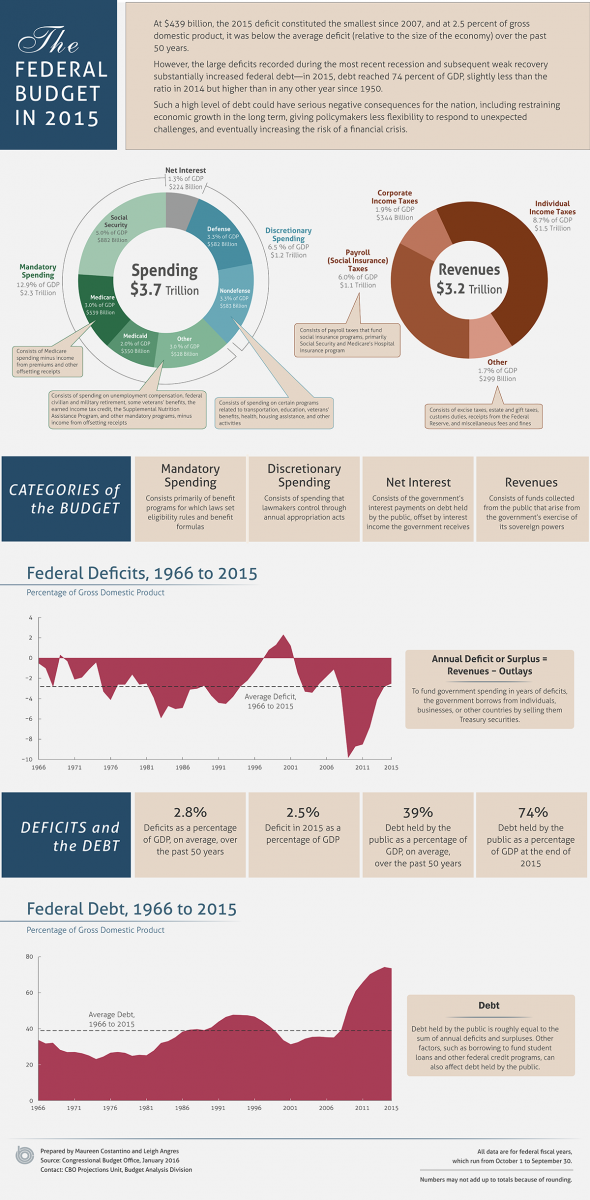
You might want to look at a pie/donut chart of government spending. Mostly you got medic{are,aid} and social security. I think most people would agree that reducing the tax payer burden of those programs without reducing benefit is an objectively good thing.
I don't disagree that the financial system should strive to be better, but during a crisis is definitely not the time to make that happen.
i know, but the subject was the return on the investment from bailing out the banks, but that return went to the federal budget, and the bailing out came out of people's pockets. it isn't comparing like for like at all.
It's not dead simple, it just seems that way because the router already comes configured for it. If you had a router already configured with a default firewall, that would seem dead simple, too.