Only problem is, fiat is better at most of the "good-natured" crime too.
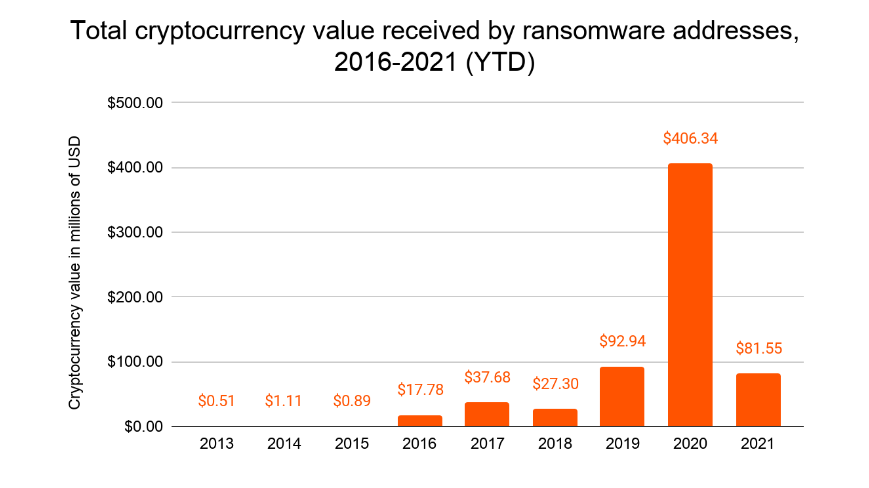
The only application I can even think of where cryptocurrency is actually better than fiat is ransomware. Actually I suppose any kind of ransom payment might benefit from using crypto, as there's no risky physical cash handover for police to intercept. Seems like it could be equally useful for kidnappers as ransomware hackers.
But I can't think of single non-ransom transaction where fiat isn't better than crypto. Legal or otherwise.
For example when buying illicit substances, I don't see why I would want to pay extra to make the transaction traceable and public?
Without incriminating myself too much, uh, let's just say I've seen considerable volumes of illegal business conducted with physical fiat cash, to a degree that likely would have been more difficult with crypto
Crypto has uniquely allowed the huge uptick in ransomware.
Before they had to figure out some way to get paid using the banking system without getting caught. These days maybe they would be asking for $50 million in iTunes gift cards, I don’t know. But it was a hurdle.
Once Cryptocurrencies started to get well known ransomware embraced it incredibly strongly. A far far more anonymous payment method that any random company or person could pay through?
That is such a fallacious argument that crypto bros love to trot out. If you look at the ratio of crime to total transaction, then crime makes up a tiny portion of what is happening in real money. Meanwhile, the situation in crypto is the other way around: Actually useful transactions are almost negligible, while >99% of what is happening is speculation, gambling, and crime. If you could shut down the entire crypto ecosystem, literally nothing of value would be lost.
I think you underestimate how much speculation, gambling and crime happens in the fiat ecosystem. The forex, just to name one thing, is $7.5T exchanged a day.
In comparison, it’s estimated that Americans spend about $10T per year. I don’t have the numbers worldwide but America is a big piece of the cake.
So, speculation is vastly higher than regular spending, even for “regular money”.
Do you really not understand that the forex market has several real use cases and serves an actual purpose. Unlike crypto, it doesn't primarily or solely exist to facility crime and speculation. If you somehow shut down the forex trade, the global economy would experience severe disruptions. If you shut down crypto, nobody in the real economy would even notice.
crypto is a kind of live estimate of the frustration with government restrictions on using one’s own property. that in itself seems to have some social value.
in the US, banks will question you if you try to withdraw your own cash from your own bank account past a certain limit set decades ago and never adjusted while the dollar continues to lose value.
Yeah quite possibly actually, I did think at the time if they were angled down slightly, it wouldn't be half as bad. So that checks out. But does show there needs to be some kind of solution for uneven situations like that
If you say person X thought Y was true, ask yourself if Y was true would you accept it? If the answer is no you are not ready for this kind of discussion.
As for whether it's true or not, let's just say we don't know for sure because scientists either are not allowed or don't want to research this question.
Gamblers know the odds are stacked against them yet they end up stuck in a psychological prison within their own brain that they can't escape from even if they realize what they do is harmful.
Maybe a better law: check id, you are not allowed to take from any gambler more than 10 bets a year and no bet can be over 1k.
For big gamblers, we can have "qualified gamblers" rules like we do for qualified investors.
Funny how we don't let average people invest in some stuff but we let them gamble.
For offshore gambling pursue them aggressively if they serve US clients.
>For big gamblers, we can have "qualified gamblers" rules like we do for qualified investors.
This is actually a take I haven't seen elsewhere. Yes, we do protect investors at least marginally better (lots of people still get fleeced with little recourse, unfortunately) but conceptually, this is a very interesting idea.
The fact that gambling exists on a loophole of being "for entertainment purposes only"[0] isn't a good enough distinction to me.
[0]: This is a brief one sentence summary of it. There's actually a bit of nuance involved depending on a number of factors, but essentially the core presume rests on some version of this.
His take isn't new. It is deployed in part in the UK. Effectively, gambling companies adopt the role of the state conducting a full audit into your personal circumstances, income, assets, bank statement, utility bills to work out whether you can gamble.
I would hope that I don't need to explain why this isn't a good idea. But the one you may not have thought of: gambling companies love this because small companies are unable to audit, margins in the sector collapsed when activity moved online, that has stopped AND they are able to target customers who they don't want to deal with, before these rules it was difficult to identify customers who would take their money, now they have your passport, your address, your bank statements, they know where your money comes from (professional gamblers can still use beards but in the UK, students used to be very popular beards...that has stopped, regulators have also brought in rules to prevent beards being used as part of the changes above...the "neoliberal" US doesn't have rules anywhere close to this, it is complete madness).
There's a difference here between the concept and implementation though.
I agree, giving up that much information to a third party, opens too many risks for me, and I don't want it to be standard.
However, I'm sure there is some middle ground here that isn't so violating to your privacy. Like mentioned before, having a default limit that can only be surpassed if you're willing to go through some form of qualification. The limit can be set in place without any audit required, if its low enough.
Gamblers know the odds are stacked against them and still gamble...because it is fun.
You realise that people waste their money on things that are significantly less understandable than gambling. Do you see someone driving a Ferrari and seethe with rage because Ferrari doesn't run a "qualified driver" program?
Didn't a hedge fund publish data encrypted with homomorphic encryption to run an open competition to see how can build the best trading AI. The encryption allow them to keep the sensitive data private.