Somehow mechanical keyboard discussions often seem to forget what I consider to be the granddaddies of them all, the ibm, now unicomp model m keyboards.*
I guess it's because unicomp does almost no marketing or at least doesn't bother to get their stuff in retail stores where there tend to be racks of so-called gaming keyboards and other mechanical keyboards?
I can always know whether I pressed the key or not using a buckling spring keyboard, the same cannot be said for linear keys in my admittedly limited experience with razer yellow switches.
*Yes there is no doubt someone somewhere who has a space cadet kb or actual physical teletype still hooked up to a modern PC somewhere, but I'm talking about something that is actually available for sale on a mass scale by consumers. The model f revival exists for collectors and is functional, but is just bespoke enough to me that it's more of a collector's item than a mass product.
In 2019, I finally treated myself to a Unicomp keyboard...I'd had a Model M that came with a PS2 model 8085 that was on its way to the dumpster and so was free as in beer. I used the Model M for years until the limitations of the PS2 connector fed me up...
anyway, Unicomp isn't what it used to be. When it arrived, it seemed oddly lightweight, but I thought maybe my memory was wrong after nearly twenty years. Then it failed after mostly sitting in a box (I was planning to use it with an RPi as a sort of project to go lightweight).
Yes a keyboard that failed. Nothing would recognize it. Failed electronics.
I'd say fortunately it was under warranty, but Unicomp requires the owner to pay for shipping their keyboards back under warranty, a Unicomp keyboard is more than 12" long and so ships at a higher USPS rate, and thus the shipping was $24.
It did come back working and I put it up on eBay and wrote the rest off as sunk costs.
Writing up the eBay listing took me back to the Unicomp website to check my accuracy and I noticed that the weight shown on the Unicomp's website was more than two pounds greater than the actual weight of the keyboard I bought plus the box it was shipped in.
Maybe I just got a lemon. The weight discrepancy makes me doubt it. Failed electronics makes me doubt it. PVC for the cable rather than rubber makes me doubt it. YMMV.
>The model f revival exists for collectors and is functional, but is just bespoke enough to me that it's more of a collector's item than a mass product.
Definitely not a mass product. The project IMO is a disaster even for a group buy type thing. I ordered long after it was an existing product and tons of people received theirs already and come to find out at that point it was still going to be a year+ wait for most people and they under no circumstances will attempt to even ballpark how long its going to take. There's a lot of work involved for the guy running the project but it would be nice to know if I'm looking at waiting 3 months, 6 months, a year, or more. Delays are understandable but that's not all that's going on here.
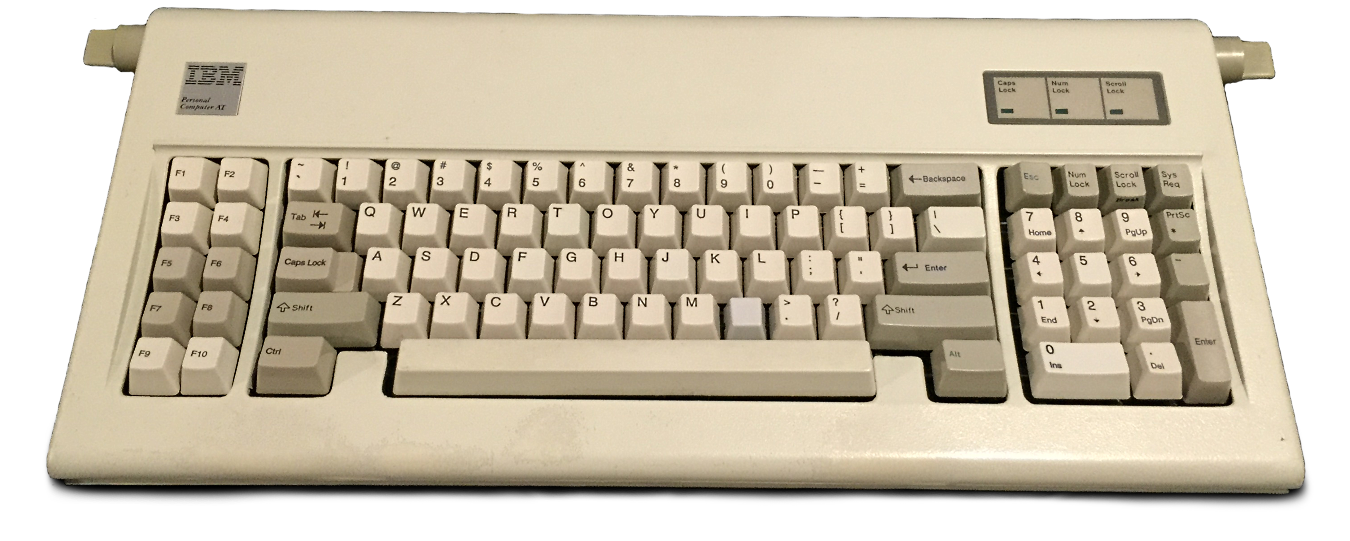
Its a fairly accurate clone of the Model F77. I think the smaller one's a clone of an F62. There were at least 6 different versions of the Model F of different sizes, including a standalone numpad/macro pad. Its admittedly confusing that its called "model F" when there's more than one model. I think the F77 is believed to be exceedingly rare. Same goes for Model M, there were lots of variations made by IBM.
Here's an article that shows an original F77 that someone was working on restoring. If you're ever looking for information on obscure vintage keyboards and all of their variants, the deskthority wiki and forum is probably the best place to start.
According to Chyrosan (probably the most well known vintage keyboard collector/reviewer) the new ones are one of the only times he's seen a clone have better build quality than the original. The keys do feel very slightly differently but that's not necessarily a bad thing. Some prefer them to the old and vice versa.
I always said that, when Unicomp made a tenkeyless, it would be a day-1 purchase. I'm typing on the "Mini M" right now. I had an actual, real, IBM Model M on my first job, and loved it. And you're right, the F switches are a little different. Less clicky. I find them less satisfying than my nostalgia. I had an actual tenkeyless IBM model M briefly, but found it unusable for programming without a third modifier key for ⌥.
I have a Model M that's a few years older than I am. It's great, and it still works, but is not as good for long-term typing as the keyboards I've used as daily drivers.
Clicky switches are a big plus for me, since they provide the audio and tactile feedback, and are just plain fun to use. The best clicky switches (imo) are the Kailh Box types with a little spring dedicated to the sound + feel of the click, but you're never going to find those preinstalled in a keyboard because they're still considered niche.
I didn't mind my M much for years until I ended up crammed in a tight space that's all wood paneled. The clacks from the keyboard ring in the space in a way that's actually painful. I have to put on headphones whether I'm listening to music or not.
I've had a Unicomp keyboard for over 10 years now and still going strong. I'm a fan of the buckling spring keyboard and really enjoy typing on it compared to other keyboards I have tried.


I guess it's because unicomp does almost no marketing or at least doesn't bother to get their stuff in retail stores where there tend to be racks of so-called gaming keyboards and other mechanical keyboards?
I can always know whether I pressed the key or not using a buckling spring keyboard, the same cannot be said for linear keys in my admittedly limited experience with razer yellow switches.
*Yes there is no doubt someone somewhere who has a space cadet kb or actual physical teletype still hooked up to a modern PC somewhere, but I'm talking about something that is actually available for sale on a mass scale by consumers. The model f revival exists for collectors and is functional, but is just bespoke enough to me that it's more of a collector's item than a mass product.