I don't mean to spoil the fun, downvote me if this is not in the spirit, but it took me way too long to figure this out and others may be as slow as me and save some time by reading this comment:
> The Pacific Northwest tree octopus is an Internet hoax created in 1998 by a humor writer under the pseudonym Lyle Zapato. Since its creation, the Pacific Northwest tree octopus website has been commonly referenced in Internet literacy classes in schools and has been used in multiple studies demonstrating children's gullibility regarding online sources of information. [1]
> I don't mean to spoil the fun, downvote me if this is not in the spirit, but it took me way too long to figure this out and others may be as slow as me and save some time by reading this comment:
I believed it too. The thing is, this is something no one is really incentivized to lie about. If some website says "politician did X", then your lie detector turns on, because it's worth it for lots of websites to lie or mislead about that. It would be very hard to go through life questioning the veracity of every inconsequential bit of information that no one has an incentive to lie about. I don't think it demonstrates much that students believed it. And I especially don't think it means anything about gullibility about information found online. Almost certainly, if it were printed in a book, they'd be even more likely to believe it.
It reminds me of a friend in high school who convinced me that he grew scallions in his bathroom. It seemed weird but he described it in some detail, how the humidity from the shower is good for them, etc. Then when I believed him he said of course I don't do that, how could you think something so ridiculous. I don't and didn't feel like believing him in this context made me gullible for the same kinds of reasons you outline, why doubt something so inconsequential, communicated 'sincerely'?
I get just a little annoyed, a reasonable amount, when someone leans into a lie for a long time, gives details, won't give it up, and even if I started out skeptical, I eventually start to believe them, only for them to pull the rug out and call me gullible or stupid or something.
No, I just made the mistake of trusting you and your persistence!
It's an important life lesson for honest people that yes, in fact many other people will lie straight to your face with things made up from whole cloth that they have zero incentive to lie about. You think "people wouldn't literally just make something up", but they do. They do all the time.
My daughters recently showed me how easy it is to grow scallions: too easy. Just cut off the bottom inch (the white bit with little roots hairs) and stick in a jar of water by a window. A week later: a complete scallion!
I was talking to my kids about this sort of thing recently, but in the context of scientific scepticism.
I don't think believing makes you gullible, is just that the consequences for believing in this case are negligible. At worst, you repeat the story to someone else, as second-hand fact. Mostly likely however, you'd never think of this conversation again, and it would have no effect on your behaviour. I think it says much more about the person telling the lie (this is a shitty thing to do to a friend) than the person accepting the lies.
Extraordinary claims may require extraordinary evidence, but it really only matters at the point where believing those claims affects one's behaviour and the consequences are tangible and different from refutation of those claims.
He may have gotten this from real story from a distant relative or family friend as this is a real hobby and the humidity is a key factor. At almost $16 for a small bottle of XO sauce[1] with the main ingredient being dried scallops, it's a highly profitable home hobby.
You can use the Polynesian palm scallop, which attaches itself to the damp bathroom wall in picturesque clusters like roof shingles. It is an aerial filter feeder, capable of subsisting on household dust (which is mainly organic matter) though for faster growth, one can use a fine-mist spray of blended sausage meat and soggy marrowfat peas. They are also excellent for repelling rats, their natural predator, by emitting sharp bursts of ultrasound when the rodent's presence is detected.
The problem is in getting hold of them, as trade in this protected species is illegal.
My wife grows plants in our shower for that reason. Not scallions, but it's other the same story. I bet he did have plants in his bathroom and for some reason switched gears about wanting to talk about it.
Then they get you on the flip side when somebody does something way out there that's almost unbelievable. It took a couple of decades for Epstein to be shut down, after catching him once and him getting away with a slap on the wrist.
Pablo Picasso once said "Art is the lie that reveals the truth." Except that he didn't really say that. What he said was "Art is a lie that makes us realize truth, at least the truth that is given us to understand." (The Arts: An Illustrated Monthly Magazine Covering All Phases of Ancient and Modern Art, NYC, 1923)
Is there a subtle truth to your friend's lie? It need not be related to scallions. We perceive the world through narrative. Perhaps your friend was introducing a fundamental truth through the revelation of scallions growing in a bathroom. Or at least that's how we would interpret it on my home planet of Zeta Reticulii IV. Of course the "fact" that I'm from Zeta Reticulii IV is a lie. I grew up in Texas. You can make your own decisions regarding the relative adherence to consensual reality between Texas and Zeta Reticulii IV.
Perhaps the story of growing scallions in the bathroom is nothing other than the creation of a shared history. Does it matter that history is counter-factual? We're social beings. We do things like that.
> The thing is, this is something no one is really incentivized to lie about
I don't think it's lying in the sense of trying to make someone else actually believe it. It's just a form of creative fiction writing. It can be a lot of fun to write in this mode; when well done it's a pleasant kind of erudite humor because to produce it (and get it) you have to be somewhat knowledgeable in the topic. Mockumentaries might be the film/TV equivalent. Unfortunately (especially for certain subjects) it also confuses and causes strife if readers take it too seriously.
The British Flat Earth Society is a joke society in this vein. They amuse themselves by writing very erudite debunkings of the nefarious Spherical Earth conspiracy theory, and sending strongly worded Cease & Desist notices to NASA.
> Add in that the animal world is full of wacky creatures that don't fit heuristic models for plausibility.
The animal involved not meeting heuristic models for plausibility may be something that should trigger skepticism, but its not the thing that should tell you this is a lie.
Add the propensity to colloquially grant newly discovered things names that borrow from existing things: sea cow, catfish, etc. so why couldn’t there be something called a tree octopus?
> Add the propensity to colloquially grant newly discovered things names that borrow from existing things: sea cow, catfish, etc. so why couldn’t there be something called a tree octopus?
There could be. The name of the animal isn't what gives the lie away.
> The thing is, this is something no one is really incentivized to lie about. If some website says "politician did X", then your lie detector turns on, because it's worth it for lots of websites to lie or mislead about that.
The purpose of misleading about “politician did X” is to sell a call to action. Any time there is a call to action supported by a claim, there is an obvious motivation for misrepresentation (the very same one present when “politicia did X” is the claim.) This contains a call to action, ergo, it has an obvious motivation for misrepresentation.
> I don't think it demonstrates much that students believed it.
I think it demonstrates a lot that half of 13-year-old students in the US study believed a page which referenced a fictitious nation-state in the Pacific Northwest was reliable, leaving aside the other indicia of deception. Though whether what it says is about internet literacy or complete failure of education on geography perhaps less clear.
> I think it demonstrates a lot that half of 13-year-old students in the US study believed a page which referenced a fictitious nation-state in the Pacific Northwest was reliable, leaving aside the other indicia of deception.
I'm just going to leave this here
>> Although the tree octopus is not officially listed on the Endangered Species List, we feel that it should be added since its numbers are at a critically low level for its breeding needs. The reasons for this dire situation include: decimation of habitat by logging and suburban encroachment; building of roads that cut off access to the water which it needs for spawning; predation by foreign species such as house cats; and booming populations of its natural predators, including the bald eagle and sasquatch.
Cascadia is a perfectly non-fictional name for the region, the Republic of Cascadia Department of Cephalopod Conservation, OTOH, is an extremely fictional agency of an equally fictional government.
Well there are mudskippers [0] [1] which can end up crawling up to and resting on branches and trees growing out of the water. So while it seems untrue, it wouldn't be far fetched for a species of octopus adapted to end up doing so, especially if the out of water circumstances are narrow enough(very temporary, trunks & branches very close to water, etc).
And there's enough improbable animals out there it doesn't sound crazy. Shrimps that live in the desert, crabs that live on land, frogs which live in trees, lobsters and mussels and shrimps and jellyfish that live in fresh waters.
> It would be very hard to go through life questioning the veracity of every inconsequential bit of information that no one has an incentive to lie about.
Some fish-looking sea creatures are actually mammals. Sea horses have pregnant males. Deep sea fish look like horror monsters. A fresh water octopus just isn't that unbelievable.
The incentive is practice in the conspiracy ideas market. It's fun to fool people, and these days it's profitable. Enter a popular conspiracy forum and you'll see how many are there to sell things. They create their own market.
So I immediately googled because it rang an alarm bell that some octopuses would develop specialized air-breathing apparatuses — that conflicts with my basic understanding of evolution. But I wasn’t googling it to falsify, but rather to see from a more ‘objective’ source if/how this occurred.
I think it’s the same basic principle as hanging up if a relative calls you begging for money or proclaiming to be kidnapped and calling you back. The costs for double-checking incredible claims is often not that high.
> And I especially don't think it means anything about gullibility about information found online
You really think it means absolutely _nothing_ about this topic? It's literally an example of people believing what they read online! I think you're having an overly defensive reaction to probably falling for it.
> It would be very hard to go through life questioning the veracity of every inconsequential bit of information that no one has an incentive to lie about
The issue is you may not understand or fathom the reasons someone may lie about something. Imagine the strange traditions that leaders have maintained throughout history to help control their subjects. To those subjects, I'm sure they weren't even imagining that these things they thought were spiritual were just fictions.
As for my point - yes you should try go through life with a certain level of curiosity and apprehension when people tell you things. I feel like a lot of our societal issues are a result of things continuing for no good reason, just because we've done it in the past. It's become fairly easy to fact-check, and while not popular at parties, it's important if you're actually trying to learn and build an accurate mental model.
If people were more comfortable questioning all aspects of our society (and if society was receptive to the criticism), I feel like we would be better off.
The site does include a call to action. I think that’s the point where one needs to question things. I certainly don’t want to be the one that writes my Congressperson about this “hoax”. The next time I need something truly important, I’m likely to fall to the bottom of the pile.
Of course they would be more likely to believe a book, they should be. That's the point: making a web page is super easy, anyone can do it. Making a convincing fake issue of a science magazine would be a lot harder, it's highly unlikely someone would do it just for a joke.
But really, if there were something as bizarre as a tree octopus, you would have heard of it.
i know enough about octopuses and forests that i don't have to care about the author's motives--i just have to skim the text or look at the photoshop. thinking a tree octopus is real because you saw a lot of words and can't relate them to a nexus of disinformation is a perfect example of gullibility
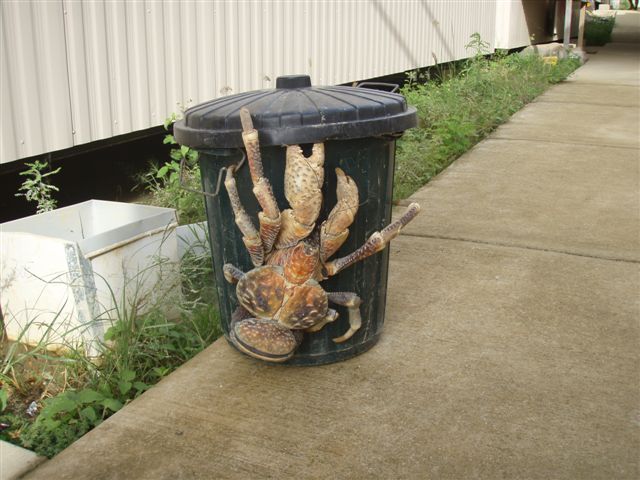
There are large crabs that climb trees and eat coconuts.
There are fish that can survive on dry(-ish) land for extended periods of time.
And don't get me started on the utterly bizarre slime mold.
The number of species that defy our expectations is countless.
Bluntly, there's a lot of arrogance in the claim that anyone should be able to easily and automatically rule out the existence of some species based on their personal knowledge, and that anyone who fails to do so is "gullible".
> there's a lot of arrogance in the claim that anyone should be able to easily and automatically rule out the existence of some species based on their personal knowledge
some, certainly yes.
i don't think anyone would disagree that some claims are more plainly ridiculous than others. i'm replying to someone who let themselves be convinced the tree octopus was real by a page picturing an octopus climbing a tree. let's not abdicate our regard for common sense.
I think you'll find your idea of "common sense" is perhaps not so universal as you think.
For example, why is a tree octopus any less likely than the platypus, a venomous aquatic mammal that has a beak, lays eggs, and detects prey by sensing electric fields like a shark?
The reason the tree octopus as described by that page seems obviously, totally fake to me is the absolutely janky "photo". Let's count the issues:
1) obviously photoshopped -- a real octopus on a tree branch would look totally different, it would sag in some places, it would affect the pine bristles underneath, it wouldn't have a shadow that makes it look like it's hovering an inch above the branch, etc. Also, that octopus image looks totally out of proportion, but I can't pin down why -- I _think_ it's because the level of detail is higher than for the branches.
2) It looks exactly like a regular octopus. Not only should an animal the size of a small bird have different proportions from a regular octopus (compare e.g. bats and fruit bats, or cats and tigers), but it should also look only distantly related to a regular octopus because it's adapted to a totally different biome.
All that leads me to the following conclusion: Common sense, in the sense of broadly understanding how the world works, really is what prevents you from getting fooled, and the more things you understand, the less likely you are to get fooled. Also, the more information a hoax has, the more likely it is to get exposed, because just one sufficiently glaring inconsistency can sink it.
call me arrogant but i won't stoop to the level i have to be at to take your question seriously.
do i think i'm as intelligent as anyone, or that everyone is as intelligent as me? of course not. but i do think your standard for gullibility is too high if you don't think believing the linked article satisfies it.
Stoop? I challenge you with a perfectly valid example of an unlikely animal, and your response is to claim I'm somehow, what, failing to argue at your level?
you asked me how i would ascertain that an animal documented to exist is more likely to be real than a hypothetical animal depicted with _a photoshop of a different animal climbing a tree_, as if there is no reasonable expectation of intelligence or intuition for an abled, functioning adult
the difference between people who initially believed this and those who didn't is gullibility, and this is a great example of gullibility because of how outlandish the claim is and appears to be. that's all i'm arguing. the counteraguments i see boil down to "but if someone is gullible enough, they'll think it's actually not outlandish and accept it on face value" which is not contrary to what i'm saying.
if you were one of the gullible ones, sorry! sucks to be more deficient than others in some way, but we all have deficiencies.
I think the point is that it seems highly unimaginative (or perhaps just highly unempathetic, if there's a difference in this situation) to not see how a casual reader could just take it at face value and go on with their day. This seems especially plausible to me if I think of someone who knows little of the natural world beyond the odd thing they've come across on the internet, doubly so if not from America. At face value it seems as plausible as anything else, with just a bit of scrutiny it clearly doesn't hold up.
But I suppose you have your deficiencies too, same as those who thought it to be real (however briefly).
you're presenting an entirely different scenario from the OP. try again with photos, maps, propaganda posters, and a few thousand words on each, and replace your question with an assertion. in absence of that i do a quick search and find out three are real and one is not but may be a colloquial term referring to a sporadic phenomenon
And the first time I read about those crabs, I checked Wikipedia to see if they were real too. Too many hoaxes on the Internet, but most of them are trivial to find out if they're real.
I think part of the purpose of sharing this website without saying anything about it might be to show that, in the age of the internet and AI, we don’t really verify information before consuming it. It’s not just children who are gullible. A lot of what we read on the internet is second hand information, facts with subjective interpretations, opinions, or straight up false information.
> in the age of the internet and AI, we don’t really verify information before consuming it
As if this had ever been different. I would even argue that, because it is simply much easier to do, people are more incentivized to fact-check imformation, than 100 years ago.
That is, there used to be some pretty universal, trusted sources of information. Encyclopedia Brittanica, for one simple example. And I'm not saying these sources never had errors or they didn't embed some of the societal biases in their reports, but they clearly had an institutional desire to report facts correctly, and pretty much nobody questioned that intent, regardless of political leanings.
The ease with which anyone can publish anything on the Internet is a double-edged sword. It makes it more possible to challenge the status quo, but it also means that some crackpot can produce a slick video that, to many people, is just as valid as some well-researched documentary that at least attempts to be unbiased.
Sorry but you gotta be a special kind of retarded to believe this. If you believe this you probably think Jan 6 was an "insurrection", chemtrails are "just contrails" and that we need to ban hydrogen dioxide.
Had it not been for your comment it would’ve definitely taken me longer to figure out, and I would’ve most likely made a fool out of myself by telling people about it.
I was extremely susceptible to this story, because I absolutely love octopuses, and everything related to them. However I’m not an expert and it would not surprise me at all (given how surprising octopuses are generally) that there was a octopus group that could adapt to an extremely high humidity area, so it seems plausible!
I like getting fooled like this occasionally cause it keeps you on your toes and shows you how vulnerable and easily fooled we all are.
I immediately thought this looked too absurd to be real, but I wonder if my lack of octopus knowledge helped me out here. I know octopi are pretty smart, but I don’t think of them as being too surprising in their capabilities.
Well I for one appreciate it. I was drawn in after a couple of paragraphs, and then started to doubt and figured I'd check the comments for exactly this kind of thing before I run off and tell my child about an amazing animal I just heard about. Thank you.
After reading about parasites that turn ants into zombies to do their bidding, I'm pretty much all out of "that's just a nonsense story" when it comes to nature's variety. I'll be skeptical, but I tend not to outright dismiss immediately.
I think this is a great point. It's easy to come back with a "hah, look how gullible you are" when someone believes hoaxes like this, but that ignores the reality that "truth is often stranger than fiction." I mean seriously, a coconut crab specifically evolved a special breathing apparatus to survive on land - why should that be any different from an octopus having "special adaptations" to keep it from getting desiccated when out of the water for extended periods?
It's like when I used to read through Snopes feeds, and 9 times out of 10 I'd think "wow, that's so dumb, how could anyone believe that", and then the tenth time I'd think the same thing for a story that actually ended up being true.
Unfortunately the campaign was unsuccessful and octopus paxarboli went extinct not long after the page first was published, before internet access was common and before smartphones could easily take pictures of it etc. Just because there's minimal evidence of something from before the internet, on the internet, doesn't make it a hoax.
> Unfortunately the campaign was unsuccessful and octopus paxarboli went extinct not long after the page first was published,
Largely, the campaign failed because of the joint US/Canadian invasion of the Republic of Cascadia based on (ironically, false) claims of Weapons of Media Deception (WMD) being deployed with imminent plans for use against North American civilian targets.
“Tourists, business travelers, and other visitors are allowed to "come" to the "country" in order to "witness" its "existence." In reality, these people are waylaid at the common borders of Germany, France, the Netherlands, and Luxembourg and taken to NWO branch facilities where they have false memories of vast sprout fields and chocolate factory tours implanted.”
> has been used in multiple studies demonstrating children's gullibility
And not to make everything about this, but in light of this, interpret various currently fashionable and harmful pseudoscientific ideologies being peddled in schools and backed by the force of the regime.
Children are very gullible. That's one major reason why they need parents, to protect them from predation and to guide them toward the minimum of adulthood. Worse still when parents themselves buy into these ideologies.
I randomly come across a link to this every ten years or so. It is put together splendidly well.
I must admit however that I’m a tad disappointed that the list of factors contributing to the critical endangerment of this wonderful specimen still has not been updated to include mention of the extinction of its once-primary source of nutrition, the harvest of the spaghetti tree [0].
Perhaps in ten more years this oversight will have been corrected!
People often ask why the Pacific Northwest Tree Octopus has such a successful ecological niche that alternates between the rainforest and under the water.
The reason is that unlike humans and other land creatures, they are completely immune to the toxic effects of Dihydrogen Monoxide (DHMO). In fact, they require regular immersion in it.
This also explains why the octopuses don't migrate farther south. When on the land, they still require ongoing contact with DHMO, which on the Olympic Peninsula is found in abundance in the very air!
This makes me sad. I once saw my nephew looking at a dino book and I joined him, and for some reason he ended up telling me that they exist in some part of the world. Stupid me laughed at him and told him that they no longer exist, and this has haunted me for years.
I say this, because there was a photo of blue teddy-octopi's legs hanging from a tree on the site, and I started imagining a dad telling his kid how this is something real, that he/she should watch for them to see if he/she can spot them occasionally.
Hurts my heart, but the site is nice, like a cherished thought which someone wanted to keep alive.
I used to teach a computer science class to elementary-middle school kids.
I always did a week on internet literacy, and would open the lesson with a worksheet that included this fella, along with a number of other fake animals, and some that look fake, but aren't.
Each kid was supposed to come up with a summary of what the animal was, where they live, what they eat, etc.
It was a lot of fun, but I've got to say... Parents: please take some time to teach your kids how to critically evaluate information that they read online.
Terry Pratchett added these wonderful animals to the world in which his book Nation takes place (one of his very best books, if you ask me). He undoubtedly was inspired by this website
Sir Pterry was inspired by just about everything, which in itself is an inspiration to always digest what this world throws at us and turn it into all sorts of fantastic things.
The context of this showing up on HN made me kinda assumed it was a chatgpt generated thing.
A quick google shows it seems to be a well known classic hoax from the late 90s.
But there really are crabs and lobsters that live in trees and things, as do lots of type of mollusc (eg slugs and snails). So it isn’t completely silly.
So it’s not like a tree octopus is any more ridiculous than the coconut crab?
It seems there is no good way to know the truth anymore, as searching the internet might just find collaborating lies and conjecture…
> So it’s not like a tree octopus is any more ridiculous than the coconut crab?
It is a lot more ridiculous though because land crabs are a well known thing (e.g. hermit crabs) whereas land octopuses don't exist. Octopuses are very much a water-only type of organism.
It just requires a little prior knowledge about the broad strokes of animalian orders.
To make things even more murky, some octopuses can actually breathe air out of water (which I knew prior to seeing the page), so I was actually semi-fooled by the article as well. An arboreal octopus is actually not that far-fetched.
>Octopuses are very much a water-only type of organism.
They're not though. Octopi generally don't like being out of water, but they're capable of traveling on land short distances and in fact the Abdopus Aculeatus octopus regularly goes on land by choice in order to hunt crabs in different tidepools. Sir David Attenborough discusses the octopus here, which this octopus was one of the animals featured in The Hunt documentary: https://www.youtube.com/watch?v=ebeNeQFUMa0
This was part of my childhood (almost 20 years ago!). Growing up, we had a lesson in either elementary or middle school in which we were all asked to read this website on the Pacific Northwest Tree Octopus and fill out a research assignment on it. At the end of it, the teacher asked us if we thought it was real and revealed that it wasn't, with the lesson that, yes, even though the internet is a valuable research tool, that we shouldn't believe everything we read.
> Although the tree octopus is not officially listed on the Endangered Species List, we feel that it should be added since its numbers are at a critically low level for its breeding needs. The reasons for this dire situation include: decimation of habitat by logging and suburban encroachment; building of roads that cut off access to the water which it needs for spawning; predation by foreign species such as house cats; and booming populations of its natural predators, including the bald eagle and sasquatch.
Decades ago, there was a Discovery Channel speculative "documentary" about far future history that had tree octopuses. I wonder if they got the idea from this website and ran with it:
which, when I first read about it, I questioned as a potential hoax. But - no, if you're not from the US, you should know that it's a very real thing, and apparently, a full third (!) of people 18-34 years old support it, according to relatively recent polling mentioned at the link.
There was a Discovery Channel special about future evolution that took this idea and ran with it. They had an idea of octopi being more land dwelling and becoming the dominant species.
My uncles spent a summer working tours near Aspen in the 80s. They worked tirelessly to educate the tourist population about the dangers of the Rocky Mountain Alpine Shark.
I didn't believe it and was widely thinking it is fake, and then I come to the comments and there we are.
First the scientific name, obscura just sold it out as fake - but as someone who lived in the area - it would've been much more obvious and probably involved in tons of actual campaigns and protests.
If I had encountered this link on social media I would have been much less likely to entertain the veracity of the claim. But coming from the front page of HN, and only lightly skimming for a couple of seconds, I started being fooled. Shows the power of reputation.
I was completely taken in until the octopus hat. There's no way 1920s fashionistas go from feathers to a pile of brown turds on their heads. The 2nd ddg hit was the Wikipedia article, the second word of which was "fictitious".
Our librarian used this site in a class about media literacy, with the lesson being that you can't believe everything you read on the internet. I guess it was a good lesson because I still remember it.
The photoshopped image of an octopus and a sasquatch hand was what first tipped me off. I wanted to believe this was a real animal, octopuses are magnificent creatures.
> The reasons for this dire situation include: decimation of habitat by logging and suburban encroachment; building of roads that cut off access to the water which it needs for spawning; predation by foreign species such as house cats; and booming populations of its natural predators, including the bald eagle and *sasquatch*.
I feel like I should have figured out this was a gag sooner...
Classic! I remember convincing friends and family members that this was real when I was young. There was something incredibly fun and powerful being a child and able to fool adults who would believe anything they read on the internet. It's amazing how websites like this inoculated myself and many other young people from obvious misinformation on the internet in a fun and mostly harmless way
Its a two hour drive from Microsoft headquarters, the perfect location to search for gullible Microsoft employees looking for this octopus, as they would become useful assets for the intelligence community. Think like a spook!


> The Pacific Northwest tree octopus is an Internet hoax created in 1998 by a humor writer under the pseudonym Lyle Zapato. Since its creation, the Pacific Northwest tree octopus website has been commonly referenced in Internet literacy classes in schools and has been used in multiple studies demonstrating children's gullibility regarding online sources of information. [1]
[1]: https://en.wikipedia.org/wiki/Pacific_Northwest_tree_octopus