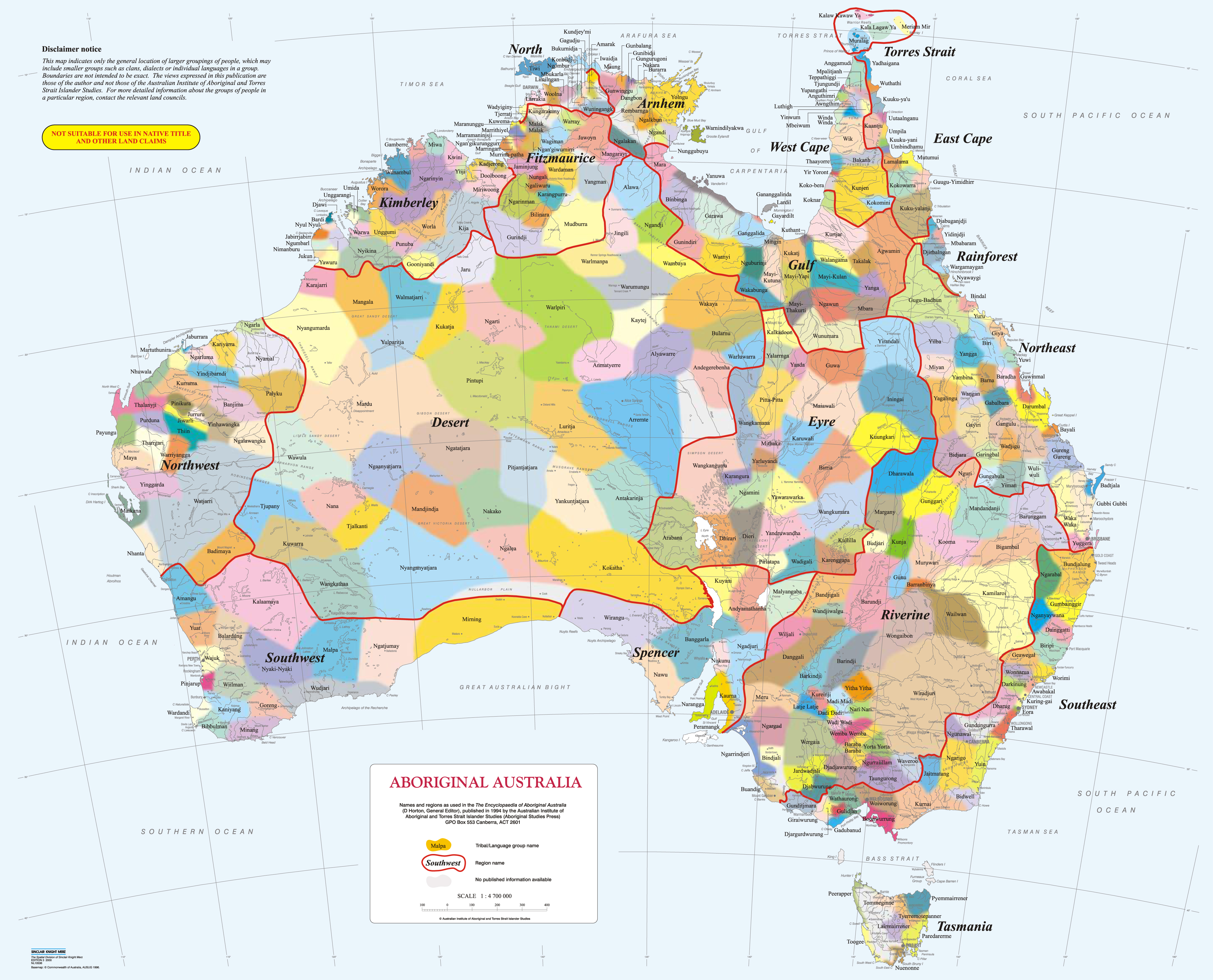
Thousands of years of history and culture, preserved in an app until the next incompatible Android/iOS release renders it inaccessible to anybody. Sigh.
Many religious belief dont hold in front of modern science. In Western world it was the evolution theory and Aborigines have other problems. By labelling science 'Western', people try to equalise both.
See also
https://en.wikipedia.org/wiki/M%C4%81tauranga_M%C4%81ori#Rel...
Considering how much of "science" has been used to devalue anyone non-western, the distinction is not odd, it's actually really important. Don't forget that anyone who does science has their own personal lens they use to look at results or steer future research areas or even blatantly skew outcomes of research.
Attempts at compensating for the westernism of science generally have not gone well. A notable example is Lysenkoism. The USSR was generally pretty good at science -- it wouldn't have even been in the space race if it wasn't -- and it was worst precisely where it prioritized ideology over methodology. Let's please not repeat the same mistake, especially not in the actual west.
If new science genuinely corrects old science, fantastic, everyone benefits. That should be through the scientific method itself, not through ideological critique.
I don't mean this question insensitively, but what's the deal with the warning? Never seen anything like that before. Is it motivated by some sort of indigenous Australian religious or cultural belief relating to photography and death?
The relatively unusual part is a post colonial government paying heed to indigenous beliefs via official channels ( ABC, the Australian Broadcasting Corp. ).
Taboos around naming or visualising the recently deceased are more common than many westerners might think
A taboo against naming the dead is a kind of word taboo whereby the name of a recently deceased person, and any other words similar to it in sound, may not be uttered. It is observed by peoples in many parts of the world, including the indigenous peoples of northern Australia, Siberia, Southern India, the Sahara, Subsaharan Africa, and the Americas.
There is a theory that the clicking sounds present in many African languages originate from taboos like these. Basically they would use a click as "you-know-who".
Source: I heard it on TheGreatCourses at some point.
It’s more complicated than that. The taboo in this case is hlonipha [0] amongst Bantu peoples, in which you cannot say the name of certain relatives, or any word which sounds like their name. By this stage, clicks had already entered Bantu languages from Khoisan ones [1], and had already started to spread through the native vocabulary. Hlonipha simply sped up that process — if you want to say a word you’re not allowed to say, it’s easy to just substitute a sound with a click.
Such a great idea, I have always wondered how much knowledge we have destroyed surely we could've learned a lot from a culture that has been around for 60k years.
We've certainly adopted those bits of the ancient knowledge that helped us survive and thrive. The rest of it did not survive because ancient cultures did not develop their equivalent of the printing press allowing for storage and dissemination of knowledge.
Still bummed that Duolingo Maori will never come; NZ government should totally be funding that. Having to do the pure textbook way takes a lot of the fun out of it!