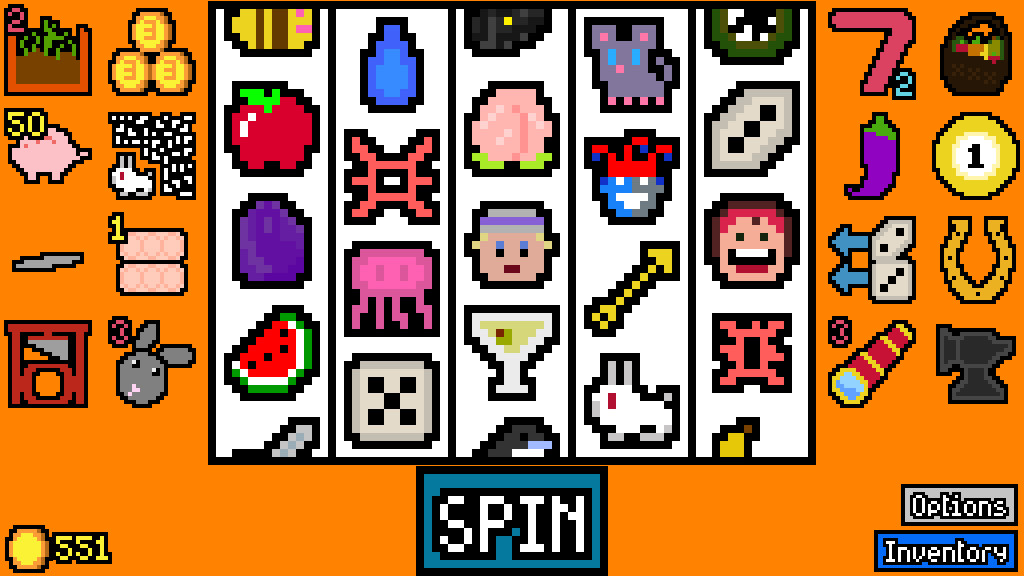
LBAL and Balatro being banned or 18+ age-gated for having gambling "vibes" despite not actually simulating gambling, while the stores are full of gacha games which are designed to bleed players dry through real-money gambling mechanics is a ridiculous state of affairs. The latter makes Google and Apple insane amounts of money though so of course they're not going to do anything about them unless their hand is forced.
Balatro having an 18+ age rating is insane. The only thing gambling about that game is it uses poker hands for scoring, and has an element of luck. How is that different to any other mobile game with a luck component (see 99% of them) with a scoring mechanism inspired by poker?
To me gambling requires betting of long term/valuable resources. In Balatro, the only thing that you'll affect is each individual run, you're back to square one after each as it's a rouguelike. Games like Clash Royale where you can spend actual money on chests for items that affect the game long term, not just for a single match, to me is actual gambling, whereas playing a poker hand using fake chips that only affects that single <1h run absolutely isn't.
It looks like whoever came up with the ratings just saw it uses poker hands for scoring and represents a score with chips, therefore it's gambling, and gave it an 18+ rating, when you're not actually gambling anything (either real world money, or long term items in the game)
PEGI can't even make their minds up, I believe it was originally given an 18+ rating, which was amended to 3+ when the publisher appealed, and then it was amended back to 18+ unprompted.
The fact that Fifa(sorry, EA Football) has a 3+ rating while having the most predatory gambling mechanics in any video game but Balatro gets 18+ is just proof that the system is not working correctly.
Looks like the stores allow apps acting like a casino and they’re only against apps looking like a casino.
Perhaps LBAL should get reskinned (with no slot animations and with some pocket monster collection instead of cards, or similar) - with no change to the gameplay.
"Gambling" restrictions in apps and media are never about the actual dictionary definition of gambling. They are about traditional visual and audio patterns. Does the app look like a casino game? If it does (but no wagering is happening), then it's gambling, and if it doesn't (but wagering is going on), then it isn't gambling. Raters probably have a list of checkbox items (icons typically associated with cards and chips, green felt, red-and-black color schemes, maybe certain sound effects), and if enough of them are checked, it's "gambling". If none of them are checked, like an anime-themed gacha game, then it's not gambling. It really probably is as simple as that.
It's just like "sexual content" ratings in TV and movies. It's not really about sexual content. It's about whether or not you show a nipple or genitalia. A show can have plenty of steamy sexual stuff but it's unlikely to be classified as sexual content unless it visually contains key checkbox items. Likewise, if it merely shows a body part in a non-sexual context, it gets labeled as sexual content.
I think that's exactly the point. And maybe from a business perspective, that's the correct (if cynical) decision -- the behavior of "activist" groups and/or public outrage seems to be driven purely by optics and screenshots, not substance.
The generation of gambling addicts who were raised into it with mobile gacha games isn't quite grown into adulthood yet.
Anti-gambling activists have limited resources too. They're going after what they recognize, which is casino gambling and simulations of it. This new shape of gambling just isn't on the radar of non-tech people yet.
I'm imagining exactly who makes these calls, if a human is even involved, as someone spending five seconds on a moderation app looking at screenshots and immediately pushing the "gambling" button so they can go on to the next task more quickly.
It doesn't have to be a human, either, at this point it could be AI trained on the same bad answers.
Everyone is paraphrasing what the judgement is. It's easy to find on pegi.info:
> This game teaches - by way of images, information and gameplay - skills and knowledge that are used in poker. During gameplay, the player is rewarded with ‘chips’ for playing certain hands. The player is able to access a list of poker hand names. As the player hovers over these poker hands, the game explains what types of cards the player would need in order to play certain hands. As the game goes on, the player becomes increasingly familiar with which hands would earn more points. Because these are hands that exist in the real world, this knowledge and skill could be transferred to a real-life game of poker.
Their issue with Balatro is that it teaches poker hands.
Now search the PEGI site for 'poker' and you'll find numerous games with Poker in the title which are rated 12 and 16. 'Poker Smash' for Xbox and 'Poker Masters' for PC and three other games are even rated '3'.
It seems that ratings have changed over time - early 2000s were much more leniant on gambling as a topic. Every game on Google Play with Poker in title, bar one, which I found had an '18' rating.
In the first three generations of Pokemon, Celadon Game Corner has those in-game slot machines where you can bet and win tokens. In gen four, the Japanese games keep the Celadon slots, but in every other release they got replaced with a minesweeper-y game to appease PEGI.
I find it an interesting commentary on child protection laws (and standards organizations that don't reach the level of legal enforcement) and related to an idea I've had for years, that people are interested in appearing like they are protecting children more than they are interested in actually protecting children.
> The latter makes Google and Apple insane amounts of money though so of course they're not going to do anything about them unless their hand is forced.
Similarly, they avoid drawing attention to their shenanigans by keeping the vibe clean
I just checked and Genshin Impact has a 12+ rating in the App Store. AFK Arena is rated 9+. Many other gacha games are 12+. This doesn't seem like a "higher age rating" to me.
In the Mac app store, where Baltro is an arcade game:
    Age Rating
    12+
    Infrequent/Mild Mature/Suggestive Themes
    Infrequent/Mild Alcohol, Tobacco, or Drug Use or References
    Infrequent/Mild Simulated Gambling
    Infrequent/Mild Horror/Fear Themes
While we are at it, WTF is with us as a society normalizing gambling behavior with places like Dave n Busters and Chuck-e-Cheeze and their ticket machines? That stuff is probably worse than gambling from the perspective of ROI.
I wonder if it is thought of as not really gambling because the ROI is so bad. The rewards have very little actual value, so fun must come from playing the games, and the toy is just a little trinket at the end. And if a kid ignores the tickets and just plays the games they like, they’ll probably have more fun. But the ticket minigame is something that some find fun, so…
Anyway, I think this is wrong, because kids are mostly playing with their parents’ money. So it still becomes a system with a positive ROI from their point of view.
If you grew up in certain communities or religious groups, standard playing cards were forbidden items because of their association with gambling.
In many of these communities, obvious replacements like Rook decks [0] are somehow perfectly fine. Even though you can easily emulate a standard deck using this deck that consists of about the same number of ranked cards divided into 4 suits.
Two things that are practically identical, but one is "evil" and one is not purely by association of how some people use one of the things.
As a species, we draw some pretty weird dividing lines.
Past weirdness in the rules adopted by certain groups is not a strong argument for these rulings against gambling themed non-gambling games while non-gambling themed gambling games receive leniency. Rather, it speaks to the remarkable superficiality of these arguments.
You (and I) have the luxury of irrelevance and thus can be flippant in our opinions... so I see your point but if I were actually in charge of a community and a significant percent of my small community was diseased with addiction to gambling, banning playing cards seems pretty tame and reasonable.
Pretty ineffective, though. You don't need playing cards to gamble. The cards and the games that use them bring some established context and process which is certainly convenient, but they're not required to gamble. If people want to gamble, they'll tend to find a way. All you really need is 2 or more participants and an outcome to observe.
Two shepherds watching a flock of sheep can gamble between themselves on which side of the field the sheep will mostly be on at mid-day.
For my own perspective as someone who did grow up in a "no playing cards" religious group, it didn't help much regarding gambling. My siblings and I made wagers on random things all the time, including card games we made up ourselves with Rook decks.
The "evil" connotation did have some particular effects, personally. I remember around age 8 or so, some classmates with a standard card deck taught me how to play "Go Fish". No wagers, just playing the game. I was still apprehensive to join the game, and I spent the rest of the day alternating between being afraid of my parents finding out and worrying that my soul had been damned.
It's 1880. you're the mayor of a small town of 300 people and two girls have been sold by their families to pay a gambling debt.
A mother appears in front of you, with haunted eyes and a worry-worn handkerchief in hand. "You cannot save those two missing girls, but you have to stop this from happening again! Help those that cannot help themselves."
What do you do, Mayor Sjsdaiuasgdia?
My guess? exactly what rational people did
  * Be vocal about the worst-case scenario
  * Criticize those that ignore the warnings
  * Ostracize those that ignore the criticism
  * Do your level best to discourage "gateway" behavior as best you can
but maybe they're fools. What would you have done? Tell us, Mayor Sjsdaiuasgdia!
Maybe I'd give a little thought to why selling their daughters was or seemed like the only solution to those families. And I'd definitely want to track down and prosecute the people who are going around buying children.
I don't disagree with any of your bullets, but none of those bullets actually require saying "playing cards are evil." They all work just as well with a theme of "Gambling can be fun, but it's addictive, and you might not know you've lost control til it's too late."
Same thing that's done nowadays, steer the riled-up citizens to label the establishments where gambling takes place as nuisance properties shut them down.
Is it? If you go to any casino you'll see playing cards plastered on every wall and suit themed decor. Even games without cards use red/black. Media depictions of gambling are usually cards. People who go to Vegas take home a souvenir deck of cards. Casinos
A deck of cards which you can use to play non-gambling card games but that doesn't use the same "branding" I'm sure works really well. It's hard to feel "cool" when you're playing with a Fisher-Price deck.
Yes it is, potentially. Where I live (and grew up) the only game played with these type of cards is Poker, and we didn't exactly play Poker growing up - so all our local games use a different deck of card. And in other not-too-distant regions they use yet another deck or two.
This might be the "worldwide standard" but that doesn't mean anything.
No joke, growing up in a religious community that banned playing cards, I was given a ton of caution about dice.
Dice for determining movement in a board game was somehow totally fine, but making anything more than that dependent on the outcome of a dice roll was considered evil.
The whole "devil is in this object" idea is something Christianity has been working to stamp out for centuries, and yet it keeps surfacing with our country cousins out in the hinterlands.
Every major religion is comfortable with the concept of needing to go out into the sticks and unfuck the rubes before they start sacrificing children to their goat god.
Yes but what if that duck statue is so appealing that you find yourself addicted to ducks, visiting pet stores looking for ducks, or wandering late at night in parks with feed in your pocket?
A subset of people come in an use something inappropriately, introducing risk for everyone else, and the easiest/cheapest way to control this is by restrictions on access to the item/tool.
Tragedy of the Commons Ruins Everything Around Me.
> If you grew up in certain communities or religious groups, standard playing cards were forbidden items because of their association with gambling.
I was told it was because the face cards were derived from Tarot cards. Playing Uno or Rook (which had only numbers on their cards) at functions was considered just fine -- although of course any poker chips would have been so obviously Right Out that nobody even thought to ask.
(FYI later on I looked it up and the face cards do not derive from Tarot cards; but these discussions happened before the World Wide Web.)
same is true for mahjong in china. because it is used for gambling it gets shunned by people who dislike gambling, although it is a perfectly fine game otherwise. we loved it as kids so much that we were the only ones who kept borrowing it from our local game library and we bought it when they sold of unpopular games. i suppose for chinese it feels like playing poker just for fun.
Balatro is similar, it leans heavily on Poker aesthetics but mechanically the only thing it has in common with Poker is that it starts with a standard 52 card deck and the hands you can play are (mostly) the ones used in Poker. You could play it for a hundred hours and still have absolutely no idea how to play Hold'em.
>You could play it for a hundred hours and still have absolutely no idea how to play Hold'em.
On the flip side, it's super similar to those video poker machines in bars and restaurants. If you allowed the option to increase the bet and got rid of the special joker abilities, it's basically the same thing. People claiming otherwise are being willfully ignorant. I love Balatro, but it's definitely gambling adjacent and depending on how rules/laws around children gambling are defined, it probably should be age gated, or those rules/laws should be updated to reflect reality, you can't have it both ways. But also, I'd say the same about all of those games with gacha and lootbox mechanics.
Now based on this thread, I’m very confused as to what Google is trying to ban or what the law (are they trying to comply with some law?) actually says. Balatro is not gambling, it has a gambling aesthetic but no actual money changes hands. Lootbox games are gambling, at least if we accept the idea that the things in the loot boxes have value; money goes in, and then you get something out with a random component to the value. But they don’t have a gambling aesthetic, they are usually wrapped up as something related to the game, right?
I could see Google wanting to comply with some directive not to “glorify gambling” or something along those lines. This would be independent of whether or not the games actually are gambling.
Anyway, I don’t think people are being willfully ignorant. I think they are just assuming Google is trying to regulate actual gambling. Not gambling aesthetic for non-gambling. But I have no idea what Google actually is trying to do.
I will note that it is pretty suspicious that the one type of gambling they managed to regulate is the one that doesn’t make them any money other than the first purchase…
> On the flip side, it's super similar to those video poker machines in bars and restaurants.
Other than playing cards being shown on screen, it's not.
> If you allowed the option to increase the bet
There is no betting in Balatro.
> and got rid of the special joker abilities, it's basically the same thing.
So completely change how the game works completely then it's "basically the same" as video poker? Do you hear yourself?
> People claiming otherwise are being willfully ignorant.
People claiming otherwise can tell the difference between 2 games using playing cards.
> I love Balatro, but it's definitely gambling adjacent
Again, there is no gambling in Balatro.
> and depending on how rules/laws around children gambling are defined, it probably should be age gated, or those rules/laws should be updated to reflect reality, you can't have it both ways.
Gonna ignore this because you haven't explained in any way how Balatro is in anyway "gambling adjacent" other than your made up situation where if you completely change the way the game works it becomes gambling, which of course is nonsense.
Ironically, the reason some states allow “video poker” gambling machines and not slot machines that look like slot machines is that poker is at least partially a game of skill.
Even though video poker as it’s typically implemented and played is essentially indistinguishable from a slot machine — if there is user choice of what cards to swap in a hand, the machine will indicate and default to the option with highest expected value, so user skill is irrelevant.
IIRC even the author of Balatro has said he would be fine with any state in which his game gets rated the same as games with actual gambling, instead of those games getting a 3+ rating.
It is like chocolate cigarettes, they are not real cigarettes, they don't have nicotine nor smoke, and yet they serve to present and normalize real cigarettes to kids, so there is an argument for banning them. Where you draw the line is a difficult ask (a chocolate with packaging and wrapping copying exactly a cigarette pack seems like a clear case, but what about cylindrical chocolates that vaguely resemble? Probably not).
I think it is fair to argue where to draw the line, but I think some "looks like gambling but without gambling" do in fact deserve more scrutiny just because of the resemblance.
(On the other end of the spectrum we as a society should really crack down on the "doesn't look like gambling but is gambling" epidemic.)
To extend your analogy, banning Luck Be a Landlord while allowing lootboxes and the like is kind of like banning chocolate cigarettes while allowing kids to have nicorette gum.
One of them has the aesthetic, one of them has the actual negative thing.
The aesthetic being banned is supposed to be in support of reducing the impact of the actual negative thing, but the actual negative thing is being PROMOTED instead of banned.
It all feels very pants-on-head kind of up-is-down logic.
This is the sort of hysteria that got comic books censored in the the 1950s and "violent" video games in the 1990s. The argument that fictional depictions of undesired behavior cause real cases of it just isn't supported by evidence, but only assumed.
Gambling is not when a lot of colors flash by on the screen, no matter what kind of pattern they flash by in. Gambling is when you bet real money on a game of chance. If simulated gambling includes simulating any game commonly gambled on even when the actual gambling part is removed, does it include dice?
Spending money to win is synonymous with gambling. virtual money that gets renewed when you start a new game is as much gambling as shooting hellspawn in Doom is murder.
There is a clone of Luck Be a Landlord named Random Card created by a South Korean developer that included microtransactions and gacha elements and Google gave that game an award.
So in Google's eyes, actual gambling is fine but simulated gambling is not even though both of them look like the exact same type of gambling. The only difference between the two is that in one situation Google gets a larger kickback.
Consistency is not Google's strong suit,
but I will put this out there:
games that involve real gambling with real money can be aimed at adults and presumably age-gated to discourage minors from playing.
Games that simulate gambling but don't involve real money aimed at minors and not age-gated are the problem.
Much like the FTC in the US bans tobacco and alcohol advertising that could be interpreted as encourage underage use.
For example, Joe Camel. https://www.ftc.gov/news-events/news/press-releases/1997/05/...
There's a reason you don't see toys and merchandise for kids,
even completely free of actual tobacco or alcohol content,
carrying branding for those products.
Is it completely consistent or good that Google gives an award to a game intended for adults while banning a similar game pitched to kids? No.
Is it at least consistent the legal and social conditions in the US? Yes.
If you want to make an argument that it's fine to target minors with products that simulate or appeal to similar interests as gambling, smoking, or alcohol,
by all means make it.
But don't conflate entertainment provided for adults with games for kids.
The game in question is rated E for Everyone (following the Random Card link from the parent comment https://play.google.com/store/apps/details?id=com.Doca.Rando...) - I don't know if the two specific games in question are mechanical copies, but the most successful gacha games are specifically marketed as kid-friendly so target audience is definitely not the issue.
The legal theory you’ve proposed doesn’t match the facts. My understanding of your theory:
1. US law doesn’t say adult gambling is illegal
2 US law does make it illegal to give gambling mechanics to minors
Since random card is only for adults, it’s legal.
Since balatro gives gambling mechanics to minors, it’s illegal.
But Random Card _isn’t_ only for adults! It’s E for everyone (ie no age restriction!) By your own reasoning, random card should have been banned. This isn’t an issue of consistency anymore, since according to your theory this should be illegal.
I think either your theory of how the law applies here is incorrect, or Google seems to be breaking the law by allowing random card to persist.
This isn't a lack of consistency, it is policy. The biggest games on mobile are gacha games which are all gambling with cutesy characters. You are giving Google the benefit of doubt when they don't deserve it.
Should Luck be a Landlord be banned from the Play Store? I don't care but pick a side. If you're against it then be against all of it and not just the part of it that doesn't make you a ton of money.
The lack of consistency is the entire point. The rest of your points don't matter to me in this discussion because whether or not games that have mechanics that look like gambling should be age gated doesn't matter when companies are playing both sides.
Maintaining a “finished” game or app on google play has never worked well for me.
There is constant nag to update it for a variety of reasons. Even if the nag comes from device related sdk updates (just recompiles), a reupload requires you to comply with latest policies that often seem very subjective.
I've completely let both my Google Play and App store accounts expire.
Google Play now wants a lot of personal information to upload stuff, and demands constant updates.
For what?
3 people to download it ?
All hands are going to be open source from here on out. If I feel like it I might set up a GitHub pipeline to build an APK, but I'm not playing this game with Google anymore.
Apple is even worse because they can reject your app from random reasons, and charge you $100 a year even if you're not publishing new stuff.
To be fair, if you were to design a game meant to create false positives for gambling, it would probably be a game just like this.
While a sympathize with the dev, this is a bit like carrying around a replica gun in public and complaining that you constantly have to ward off police reports.
To me, the point is that trillion-dollar OmniCorp LLC should probably have an actual human review the game's content before the game gets yanked from the store, given that they have the resources to do so.
To be fair… Your example is a bit off. If you want to make the odd comparison, it is more like carrying a replica civil war long gun around while in civil war reenactment attire and wearing a sign that says, "On my way to a civil war reenactment, this is a fake gun and uniform" which you have done every day for years.
As another commenter pointed out, this is ridiculous in light of all the gacha bullshit. It's like being arrested for carrying a replica gun in public while every other person around you is carrying a real gun but with kawaii Hello Kitty charms glued to them and the police leave them alone.
Walmart is selling one right now that is rated "E for Everyone"! This is a game that simulates gambling, complete with wagers / bets and winnings and everything.
Luck Be a Landlord doesn't have a function to bet before spinning. It doesn't feature gambling at all.
The ESRB and Walmart are OK with kids playing a casino gambling simulator, but that doesn’t mean Google or Apple should be too.
For a parent who looks at their kid playing on their phone with a Vegas-style video slot machine on the screen, complete with a "Spin" button, it appears to be gambling. At a minimum, it’s normalizing real-life casino gambling motifs for their child. Some may find that objectionable for children, and it appears the tech companies agree.
If you can't see that this is 99% of a video slot machine game, just without any cost per spin and 8-bit graphics, then maybe you should visit a casino: https://youtu.be/Vaw2g0tQo58?feature=shared&t=102
>The cost per spin is the thing that makes it gambling.
The "landlord" aka casino is constantly requiring that you pay `X credits within N spins` or else it's game over. That is just moving when the subtraction of player's credits happens from every spin to every few spins. It's effectively X/N credits per spin, per "rent" notice. That's a core game mechanic.
You realize you're trying to argue that this is appropriate for children, where the whole game is they pretend to be a gambling addict trying to make their ever-increasing rent payments (which children don't have) by taking spins at a video slot machine.
I'm not trying to be mean here, but it feels like you have no idea how a slot machine works...
Luck Be a Landlord has no "put money in before you spin" aspect. There's no wager / gamble. It has the aesthetic of a gambling machine with no gambling mechanics.
With a slot machine, you "bet" by putting money into the machine before you spin. When you get a payout, the amount of money you put into the machine is part of what determines how big the payout is. That's the gambling part, the putting money in to (potentially) get money out part.
> I'm not trying to be mean here, but it feels like you have no idea how a slot machine works...
It has every aspect of the slot machines I was playing just 2 weekends ago at casinos in Reno, but without credits being deducted from my balance per spin. Instead, in this game, you must pay lump sums from your credit balance to the Landlord after N spins. It's thinly disguised gambling with fake credits, but with a "Gamble now, pay later" twist.
EDIT: my mistake, it appears from the video you also pay one credit per spin, in addition to the rent.
>It has every aspect of the slot machines I was playing just 2 weekends ago at casinos in Reno, but without credits being deducted from my balance per spin
So other than the gambling part, it is a lot like slot machines.
Interesting!
How many of the slot machines that you played in Reno have a feature where you get enough cultists to summon an eldritch horror? That's normal late game stuff for Luck Be a Landlord.
I don't gamble. I play games sometimes, but I don't wager money on them. I have no interest in playing games for money and you'll never catch me in a casino unless there happens to be a conference or convention held there.
I'm not sure what you're trying to do with this thread, but I do not think you're having a good-faith discussion about something you're curious about.
Its more like getting harassed by police because they think you're the type that carry a gun. While others open carry without permit but never gets stopped.
Slot machines are survival games, as long as you have money your game session survives. There are many elements to gambling, hazarding some amount of money is an important, but not the most addictive part.
Of course it's silly. I think the game is great and fun (and ... humans can get pretty enthusiastic about fun games ... to the point of putting off other things so they can play said game ... oh noes!), and Play/App stores are their own special hell, so best wishes for the devs, yet ... I think the policy applies to this game. (And likely to others too as you point out.)
To the folks mentioning every game under the sun with a random element and calling it "gambling", that's wrong.
Gambling involves random events,
of course, but not just random schedule.
The payout being random is what makes gambling gambling.
People don't spend hours at the slot machine because every once in a while they get a giant jackpot.
They spend hours because relatively frequently they get some payout,
but any given payout may be small or large.
Same with the lottery: people don't keep playing it because of that 1 chance in a few hundred million of getting the (as of this writing) $95 Million (Mega Millions) or $285 Million (Powerball) .
People play the lottery every week looking for that $2 or $5 payout, or on good weeks a $20 or $50.
Related, I've noticed a lot of streaming services have began reclassifying the ratings of older movies and shows. So someone that was G or PG when released might be, like, 14+ on Amazon.
Maybe it's part of an effort to add consistency to old ratings (which were famously inconsistent). But more often it's that the ratings are being "adjusted" for modern sensibilities - depictions of smoking, drinking, bigotry, etc.
I have no idea where this new prudish attitude towards gambling is coming from, but it seems to be part of a larger cultural "vibes" shift.
Society is, at least in the US, much less prudish towards gambling now than ever before. The major sports leagues refused to even put a team in Las Vegas for years because the entire city was taboo, now every broadcast has a million ads for gambling apps.
tl;dr the online mobile phone based gambling (oh, excuse me it's sports betting) apps' societal cost is too high, the whole economy is basically predatory (because the sane platforms were driven out of the market)
"""
[...] total sports wagers had grown to well over a hundred billion dollars annually and states with legalized mobile sports gambling had seen a corresponding rise in calls to addiction hotlines [...]
While most gamblers wager responsibly, a concerning minority do not. Large samples of individual financial data show that legalized sports gambling decreases credit scores, increases debt loads, and substitutes positive investment activities. These effects are particularly prevalent among low-income men.
"""
Apple and Google's app store policies have destroyed billions in potential market capitalization of both large and small companies alike, and have measurably negatively impacted the national security of the west by destroying the resilient peer-to-peer software delivery supply chain common to systems like MacOS and Windows, replacing it with a centralized, easily exploited gatekeeper.
It looks like a slot machine but features no gambling mechanics. The payout is a result of the symbols you collect through a session, not a function related to a wager placed before spinning. In fact, there is no wager.
It has more in common with something like Slay the Spire than it does Ceasar's Palace.
Any game with a paid lootbox (TF2, Overwatch 2, etc) objectively has more gambling than this game.
Fighting against the plight that is the unbridled gambling put in front of large swathes of people with no grasp on math is treated as innocence. It will cost us so much as a society, so, so much more that the small short term profits it brings. For shame.
The cover art made gambling look like fun. Thought the game was not really bad, it wasn't much fun. A odd choice for a a kids game company. Though sponsored games weren't around but would come soon enough (Kool-aid man, heman ,main etc...)
It is the whole cancelation culture, if you want to have some fun, check some stand up comedians about kids from the 1970's were doing playing on the street, and what they are allowed to do nowadays (almost nothing).
Given your example, I am sure you might relate, as a 70's child, I surely do.
Dancing at the edge of a volcano has risks, and the person who falls in may feel that someone else deserves it more. And onlookers may agree that the dancer doing triple backflips shouldn’t survive if someone doing the Macarena flops into the cauldron. Lots of reasons to say “whatabout”?
Woah, not even age-restrict them, outright ban them? Personally, I think it is ridiculous that a game like Balatro is considered to "resemble gambling" if a game like Solitaire, Minesweeper, or Pac-Man is not. A game that involves risking virtual (or actual) money on a minimally semi-random outcome can be classed as "resembling gambling", for sure. Nothing else should.
Balatro's various bannings are particularly egregious, as it in fact does not involve risking money in the gambling sense. It has cards, and it has a concept of money (though in Balatro, barring particularly constructed setups, $25 is generally a lot of money, "dollars" doesn't meaningfully correspond to any real value of currency), but there's no "bet this much money on the outcome of the cards".
(Sure, a contrarian could construct "Yeah, but when you're buying rerolls of the shop you're gambling on getting a desirable outcome", but, let's not pretend to be stupid just to be contrarian, that's not where the bans are coming from. They're coming from "I see the word 'dollar' and the word 'chips' I see cards and poker hands, therefore it's gambling, and I'm literally not going to spend 30 seconds thinking about this even though it's one of our biggest sellers.")
The biggest thing that sets Balatro apart as not gambling to me is you never bet anything of any value. Anything you do only affects that individual <1h run. No money involved, no long term items, literally just fake chips and fake dollars for that specific run, and when you win/quit/lose you're back to the same position you started at.
It isn't just that you don't bet anything of value. You don't bet anything, period. There is no wager. There is no bet. There is no way to put up $5 and if the outcome goes your way you get $20.
You may, with all the various features in the game, be able to construct something that has that effect, although it would still require some squinting and blurring because there is certainly no dialog that ever pops up saying "Bet how much: _____". I'm hedging just because there's an awful lot of features in the game and you can do a lot of weird things if you try. But nothing is immediately coming to mind, without so much squinting that you'll turn Final Fantasy X into a "gambling" game because "you might run around starting fights to get rare loot" or something of a similar level of "possibly true in a really abstract sense but not a useful definition". You can, philosophically, define gambling down to "putting any sort of time or resources in for an uncertain outcome of any sort" and do useful math on such definitions but that's not a useful definition for the discussion at hand because that just describes life, and all games except deterministic solitaire games, which are a legitimate category but also a small minority.
Genshin Impact teaches how to blow hundreds of real dollars on "pulls" that may or may not give you anything of value. This is much closer to the essence of gambling than poker hands.
Gambling is not cards or slot machines or pachinko balls or any of these aesthetic elements. It's the wagering of real money on an uncertain outcome. This is why sports gambling is gambling even though it doesn't involve any of the above aesthetic elements. Genshin Impact is much closer to gambling than Balatro.
What are the "aesthetics of gambling"? Do all games involving dice rolls resemble that aesthetic? If gambling aesthetics change to resemble popular game aesthetics, does that expand the list of games you'll ban?
I'd angle the bar even lower at that end. Any game that involves virtual money, that can be purchased with real money, and a random element should be classed as gambling. That would include things like Pikmin Bloom.
Gambling with Klondike solitaire is actually a thing some casinos offer; you buy the deck for $X per card (e.g. $52) and get paid $Y for each card you get to the foundation (e.g. $5). IIRC, some versions of windows solitaire even offered that style of scoring.