Sanskrit is a festidious language that agglutinates huge numbers of tenses and forms in to a festival complexity that is a classical feature of the Indo-European language family. It might be great if you feel like being really damn specific, but it might also suck. It depends what you want to do with it.
I would posit that Sanskrit is more like assembly language (for its unique combination of specificity, table-thumping traditionalism, and verbosity). On the other hand, classical Chinese, which presents a roughly similar vintage literature, is a more fluid and combinatory system for type-indistinct component thoughts ... sort of like an extreme version of perl.
Your view of Sanskrit is probably skewed by a few things. First of all, nearly the entire corpus of Sanskrit literature was written after (and in many cases long, long after) it was used as a day-to-day language. It was probably already losing ground at the time of Panini, roughly 500 BCE.
Second, what Sanskrit literature we have is highly artistic and edited literary text, replete with hard-to-get cultural references, not ordinary spoken language.
Finally, it's probably just plain different from whatever language you're used to, not intrinsically harder or more complicated.
IMHO Sanskrit is both harder and more complicated than Latin, which I spent years on before coming to a dalliance with Sanskrit and Pali. Then again, other than Latin (which I aced), I've never had much success with Indo-Europeans (except basic French, through drink).
Not really, there is no evidence of Sanskrit being used for conversation other than in learned circles. Most of the Upanishads, Aranyakas and Puranas and the last two vedas were written after 500 BC. Kalidasa - arguably the greatest litterateur in Sanskrit lived after 500 BC. Bhasa - the playwright lived after 200BC. Most of the Sanskrit oeuvre has been produced after 1st AD and prolific works continued till 16th century.
More of one's working knowledge is loaded into the specifics of vocabulary in classical Chinese, whereas more of one's working knowledge is loaded into grammar in classical Sanskrit. At least it seems so at first. Wrestling with the complexities of compounds in Sanskrit and syntax in Chinese blurs this distinction though. The animating morphologies transcend the vocabulary/grammar distinction in highly modular languages.
At bottom both Chinese and Sanskrit, like many other classical languages (Latin, Greek, Arabic), are quite modular. While Chinese's phanopoetic menagerie may not at first glance appear as RISC-y as Sanskrit's lexis (comparing radicals to roots may not be fair anyway), basically it's rare in both languages to stumble across a word that is just a black box, whose etymology you can't pull apart so as to guess what it means. Rarer, at least, than modern languages, which seem more atomized and dictionary dependent, as opposed to the classical languages, which by their systematic modularity were able to function as universalist languages of empire.
I know both Classical Chinese and Sanskrit and have no idea what you are talking about.
"It's rare in both languages to stumble across a word that is just a black box, whose etymology you can't pull apart so as to guess what it means."
Err, yeah I guess you can guess from the morpheme of a Chinese character that a particular character is a type of tree or has something to do with trees, but that's about it. Similarly with Sanskrit, because of sandhi rules often times you can't even figure out what the word is in advance, and I'm not sure how you are suppose to "guess" the meaning absent looking it up in Monier Williams (unless you are guessing backwards from other Indo-European languages, in which case your potential guessable vocabulary will be quite small).
Jd, how do the sandhi rules keep you from finding out what the word is? They make it easier to find out. The rules are just that -- rules -- that bring order out of the chaos.
As to how you guess, yes, you infer from the etymology.
The fact that it's guessing doesn't mean it's easy, or that guessing gives you as much information as actually looking it up, parsing it, etc.
Glad my post survived the glance of a pro! (PS. Saw your evr.gr: please send me an email, I am working on ~LETS stuff tangentially and would like to share info.)
Sanskrit isn't verbose. I haven't seen any English translation that is very much lesser in size compared to original sanskrit text. I have to agree with author's comparison to lisp, very powerful ,very systematic (in fact the alphabets are arranged in the order in which tongue and palate interact to make that sound http://www.sanskritsounds.com/about-sanskrit/46/index.html) but lacks adoption of masses.
Sanskrit isn't verbose. I haven't seen any English translation...
Sure! Long multi-phoneme words with all the tense built in... the wordcount will be low. I meant semantically verbose, roughly: "average minimum unit of well-formed expressible information". In this facet, I found Sanskrit far worse than even Latin.
I recently noticed similar diffrence between Polish and English. Usually Polish text is shorter in written form (less words, and often less letters), but English text is shorter when spoken (less syllables). Polish has also a little more redundancy because word endings must agree.
It almost seems like Polish was optimized for reading/writing and correctness, and English for talking and speed.
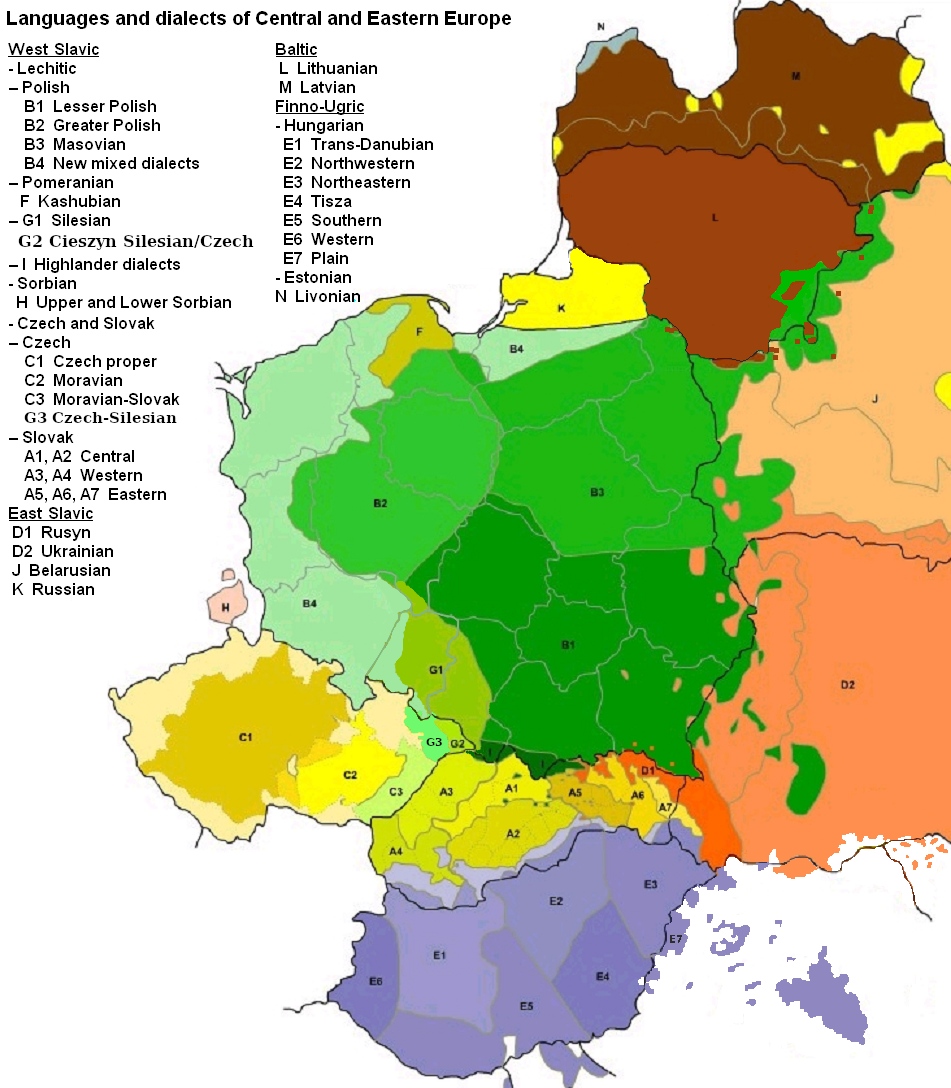
It's late here so I'm not going to research this before responding. It is my impression from some previous reading that the closest European language to Sanskrit is German, with certain words such as luft (Lufthansa, Luftwaffe, etc.) being directly traceable to a common ancestor. With all of the Prussian-style border-shifting in the Germano-Polic region over time (the German History museum in Berlin is absolutely amazing illustrating it with maps!), I wonder if perhaps Polish shares some of that - for wont of a more informed phrase - 'old school Indo-European' quality? The answer is probably on Wikipedia, which also distinguishes betwen many types of Polish: https://upload.wikimedia.org/wikipedia/commons/1/15/Language...
Strange, I think Polish share much more with Sanskrit than German. Not that it makes it somehow better or worse, just my opinion.
For example we have flexion system working smilary to that in sanskrit (you glue up pre and postfixes to the word to change the tense, mark the gender of the actor (mandatory), or depending on the case of the noun). German has sth similar only in a few places (past tense), and in concatenating nouns together. Most of the time word order and "keywords" decides on the tense, like in English. Polish have 7 cases (1 rarely used), sanskrit has 8 (1 rarely used), German has 4 IIRC.
Polish only recently (a few centuries ago) lost dual plurality that exists in sanskrit, and we still have relicts of that in many places, like proverbs, names for body parts, the way nouns change with numerals, etc.
And these all things aren't specific to Polish - almost all Slavic languages share them. I've also heard Lithuanians say their language are even more similar to sanskrit.


I would posit that Sanskrit is more like assembly language (for its unique combination of specificity, table-thumping traditionalism, and verbosity). On the other hand, classical Chinese, which presents a roughly similar vintage literature, is a more fluid and combinatory system for type-indistinct component thoughts ... sort of like an extreme version of perl.